Essay · Leadership
The art of smart questions
A machine can give you answers in milliseconds. It cannot tell you what to ask.
Think back to your last major business decision. A new product line, a key hire, an investment in technology. Did you jump to a solution, or did you sit with the question first? That difference, more than experience or knowledge, is what separates good leadership from exceptional leadership. In a world drowning in answers, the scarce skill is the question.
4 things stop capable owners from asking well. The first is the expertise trap. After 20 years in an industry your experience becomes the lens for every new challenge, and it quietly blinds you to anything that does not fit what worked before. The second is time pressure. Asking deeper questions feels like a luxury, and the rush to solutions produces the costly mistakes that eat far more time later. Measure twice, cut once. The third is the competency illusion, the myth that a leader should have all the answers, which turns asking into a confession of weakness. The opposite is true. The most respected leaders in any room are the ones asking the most thoughtful questions. The fourth is the echo chamber. A close knit team that has worked together for years stops questioning its own assumptions precisely because it trusts itself.
The way out is to master 5 kinds of questions, each with its own job.
Investigative questions build your foundation before a decision. What evidence do we have that customers actually want this? Which of our assumptions have we actually tested? Speculative questions break conventional thinking. What if we reversed our business model entirely? What would our biggest competitor do here? Productive questions move ideas to action. What is the smallest first step that would test this? How could this initiative fund itself? Interpretive questions find the meaning underneath. What is this small change signalling about where the market is going? What would this decision do to our culture in 5 years? And subjective questions surface what nobody has said aloud. What concerns about this decision have we not voiced? What are we afraid happens if we take this step?
Run a decision through all 5 and you will notice something. The decision changes. Not because new information arrived, but because you finally saw the information you already had. That is what a question is for.
Essay · Decisions
The mental traps that quietly run a business
The most expensive battles in business are not fought in the market. They are fought inside the owner's head.
Every day, in offices everywhere, owners wage an invisible battle. Not against competition, but against their own mental patterns. These traps stay invisible until they have already done the damage. Here are the 6 I meet most often in the coaching room, each with a face I remember.
The perfectionist trap. A talented artisan baker spent 8 months perfecting her packaging and brand identity. While she refined the typography, 3 competitors launched and took the holiday season she was counting on. When she finally launched, her customers cared about the product, not the boxes. Perfection cost her the market and the feedback that would have made her better. The escape is a firm definition of good enough, a launch date you keep, and improvement done in public, iteration by iteration.
The burden of saying yes to everyone. A consultant built her name on being always available. 18 months later she was working 70 hour weeks with shrinking margins. Her own client data showed that 80 percent of her profit came from the 20 percent of clients who respected her boundaries and paid properly. The rest were buying her life at a discount. Boundaries are not rudeness. They are pricing.
The chaos of infinite ambition. A software founder saw opportunity everywhere: healthcare, retail, education, restaurants. His team of 15 was spread across 5 markets and excellent in none. Revenue stalled while costs soared. Opportunity is not strategy. A clear rule for what you refuse is worth more than a list of what you chase.
The illusion of indispensability. An agency owner with a team of 12 still reviewed every proposal, every email, every post. A health scare forced her to step back for 2 weeks, and the team not only coped, it produced ideas she had not considered. The business had been ready for years. She had not.
Analysis paralysis. A retailer spent 3 months analysing a new product line. Her competitor launched in month 2. The brain seeks certainty to avoid threat, but in business certainty is an illusion, and waiting for it is the biggest risk of all. Ask whether the decision is a one way door or a two way door. Most are two way, and a two way door should be walked through quickly.
The vision and execution gap. A founder with a genuinely inspiring vision burned through his capital in 2 years with little to show, because vision was never broken into quarters, and quarters never into months. A dream with no milestones is a story. A dream with milestones is a plan.
The pattern under all 6 is the same. The trap is invisible from inside it. That is not a character flaw. It is the reason the room needs one person in it whose only job is to see what you cannot.
Essay · Growth
Growth is a system, not a spurt
Most businesses grow in episodes. A push, a plateau, a panic, another push.
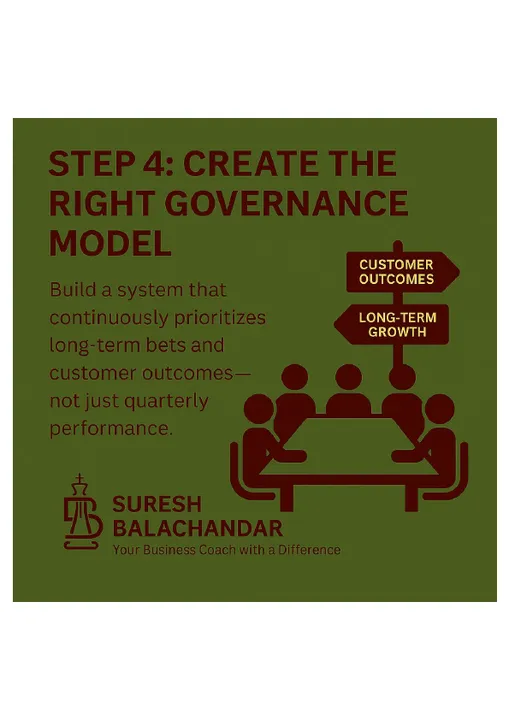
Ask a struggling owner how growth happens in his business and he will describe effort. A campaign, a push, a good month. Ask a strong one and he will describe a machine. The difference matters, because effort is episodic and a machine is continuous. A growth system keeps a business growing even when the environment is uncertain, and it has 5 connected parts.
1. A compelling customer outcome. Not what you sell, but what actually changes for the customer who buys it. Every strong growth system starts by defining this so sharply that everything else can be tested against it.
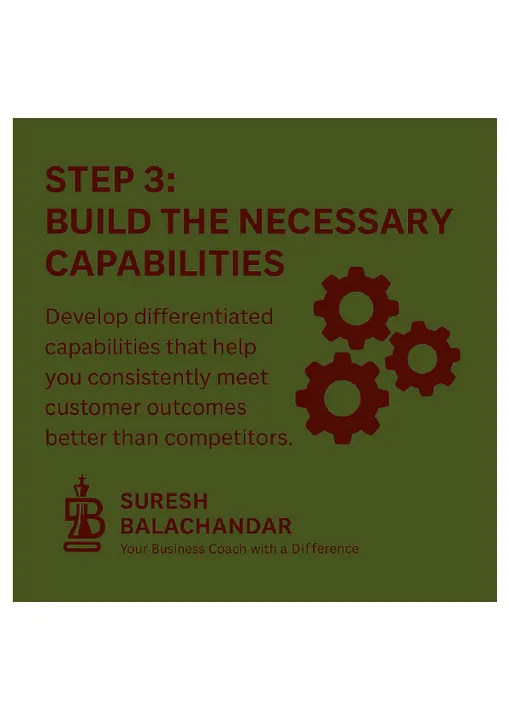
2. The right capabilities. Once the outcome is clear, the question becomes what the business must be good at to deliver it repeatedly. Not everything. The few capabilities that produce that specific outcome.
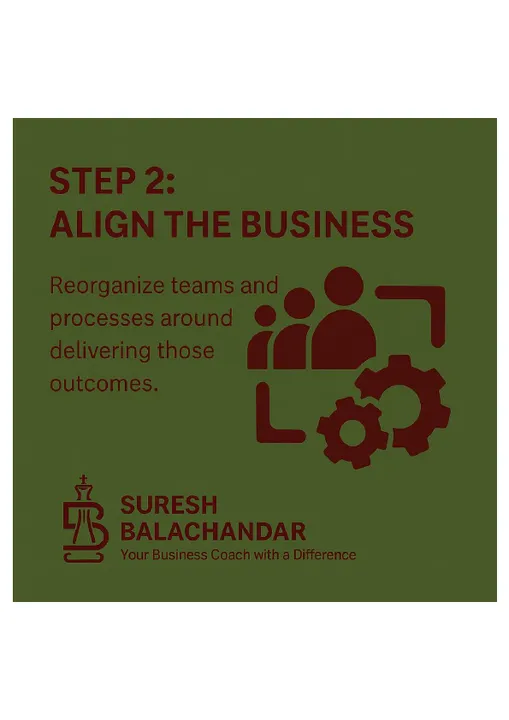
3. The right operating model. Capabilities need structure to run inside. Who does what, in what rhythm, with what handoffs. This is where growth stops depending on the founder's personal push.
4. Continuously renewed insight. Markets move. A growth system has a deliberate way of learning: from customers, from lost deals, from the numbers, so the outcome and the capabilities stay current instead of slowly going stale.
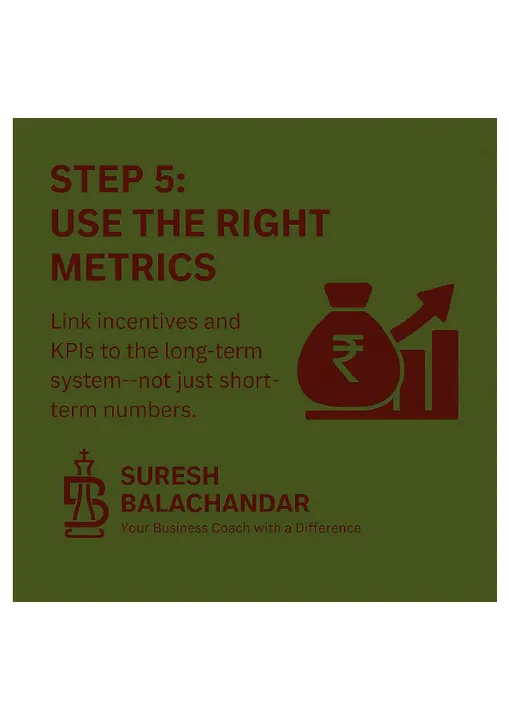
5. Measured return. Every part of the system is measured against what it produces, so money and attention flow to what works and are withdrawn from what does not.
The power is not in any single component. It is in the connections. The outcome defines the capabilities, the capabilities shape the operating model, the insight renews the outcome, and the measurement disciplines all of it. When the parts connect, growth stops being something that happens to the business in good months, and becomes something the business does.
Essay · The craft
How I coach, and why it works
Direct, transformational, solution oriented. Here is what those words actually mean in the room.
A coaching engagement succeeds on 3 things. The coachee's willingness to learn, the coach's ability to transfer the right knowledge, and the style of coaching itself. The first two are largely fixed by the people involved. The third is a choice, and you should know the style of anybody you are about to pay.
Mine is direct, transformational, and solution oriented. Direct means I tell you what I see, including the parts that sting, because a coach who softens the diagnosis is charging you for comfort. Transformational means the work goes below the surface. A business problem almost always has an inner layer: the beliefs guiding the decisions, the patterns in the behaviour, the perspective through which the owner reads the market. Working only on the visible layer produces advice. Working on both layers produces change. Solution oriented means every insight ends in a framework you can apply the same week. Understanding that does not become action is entertainment.
Whatever coach you choose, demand 1 trait and 1 skill. The trait is empathy, and it is not softness. Transformation requires the coach to understand exactly where you are starting from, and that requires listening without bias or pre judgment. You can test for it in a single conversation. Does he reflect back what you actually said? Does his attention hold when you speak? The skill is business acumen, and it has 4 pillars: market awareness, strategic planning, operational excellence, and financial understanding. A coach in other fields can guide by questions alone. A business coach must know the terrain, because the right question at the wrong altitude is worthless.
Test me against this list in the first conversation. If I do not clear the bar, walk away and take the list with you. It will serve you with whoever you choose instead.
Essay · Decisions
Frame the problem before you solve it
More than half of the 350 decisions in one study failed, and not for lack of effort or money.
Paul Nutt of Ohio State University studied 350 decision making processes inside real companies, and found that more than half failed to achieve their goals. The cause was consistent. Under time pressure, teams rushed into solving mode before they had properly framed what they were solving. The solving was energetic. The framing never happened.
Problems come in 2 forms: the recurring ones you recognise, and the new ones you have never faced. In both cases, the quality of the outcome is set less by how fast you solve and more by how well you frame. Here is the 5 phase discipline, scaled for a business your size.
Phase 1. Assemble a diverse room. Different perspectives, including at least one outsider, asking what if and how might we. A room that agrees quickly is a room that is framing nothing.
Phase 2. Go below the event. The visible problem is the surface. Underneath it sit behaviour patterns, and under those, structures, and under those, the mental models that produced everything above. Dig until you reach the models.
Phase 3. Face the stakeholders. Identify who lives inside this problem and who must live inside the solution. Map what they say, think, feel, and do. A solution that ignores its stakeholders is a plan for a second problem.
Phase 4. Connect it to the larger picture. How does this problem tie into the wider dynamics of the organisation: the interpersonal, the political, the structural? Problems rarely live alone.
Phase 5. Only now, move to solutions. Define the outcome you want, reverse engineer the steps, and adjust the processes, policies, and behaviours that must change to get there.
This looks slow. It is the opposite. The fastest route through a problem is the one you only have to travel once.
Case study · Technology · Names removed
The founder who could not stop polishing the product
The problem was not the product. The problem was what he believed a strategy was.
The founder of a technology company in Chennai is one of the smartest people I have met in my professional life. His grasp of product architecture was remarkable, and his foundational products had real potential. Yet the business was not moving. He called me, we spoke for an hour, and my first reading was the obvious one: no proactive marketing. We began the coaching, and I learned the difference between an issue and a problem. An issue keeps recurring even after you address it, if the problem underneath stays unsolved. The missing marketing was an issue. The problem was that he and his team never stopped working on the product. However good it got, they kept making it better.
One cloudy Saturday evening we met for coffee on ECR, and I went looking for the reason. It was twofold. First, the product was his child, and no amount of nurturing ever felt like enough. He was product focused where the market only ever asks for good enough. Second, and this was the real discovery, he was afraid that one of the giant technology companies would one day launch something better on the same idea. That fear drove the endless improving, and the improving blinded him to the market and its revenue.
Then I asked him what a strategy is. His answer, after some probing, was that a superior product would earn the market's attention. That was the whole picture in one sentence. So on Sunday morning we started from the beginning. A strategy exists to create a meaningful differentiation, and when the market perceives that differentiation as better or first, you gain a competitive advantage. It does not rest on a superior product alone. Picture 3 circles intersecting: Product, Marketing, and Model. Strategy lives where they overlap. A good enough product with a strong model and sharp marketing beats a supreme product standing alone.
The second surprise came at the models. He told me his business model was B2B. But B2B is a revenue model, not a business model. He had priced his products ambiguously because the 3 layers, pricing strategy, revenue model, and business model, had never been separated in his mind. We worked through them in order: the benefit the product delivers, who feels that need intensely enough to pay, the price that reflects it, the revenue model to carry it, and finally a business model combining subscription and platform to support both. From that triad came the differentiation, from the differentiation the positioning, and from the positioning the communication.
Relief and regret arrived together. Relief, because the fear of the giants lost its power the moment strategy stopped depending on product supremacy. Regret, for the years spent polishing instead of selling. The company found its footing quickly after that, raised its first serious capital within weeks of going to market properly, and now runs with steady monthly cash flow and a much larger ambition.
If you are hesitating to go to market because your product does not yet feel supreme, this case is for you. Good enough is enough. What cannot be good enough is the strategy that carries it.
Case study · Family business · Names removed
The ₹35 crore business stuck in a Monday meeting
He blamed the team. Then I sat through one Monday morning review.
The managing director of a family owned business in south Tamil Nadu called me one hot afternoon. ₹35 crores in annual revenue, a solid position in its industry, and an owner who wanted ₹100 crores and could not understand why the company moved like a snail. "Maybe my team is not efficient enough," he said. Many owners reach for that explanation. Something in his voice told me the story was bigger.
So I asked to attend his Monday meeting. For 2 hours, the whole team was grilled over missed deadlines, dropped leads, and unfinished work. He wanted to know everything, every minor task and every detail. People spoke carefully, because any misstep would swing the spotlight onto them. By the end it was clear the inefficiency was not in the team. It was in the system he had built around them. Every employee felt they reported directly to him, bypassing their own managers. The MD of a ₹35 crore company was doing the work of a middle manager, and the meeting that was meant to create accountability was draining the exact energy the growth needed.
I asked him one question. "Do you think it is really your team holding you back, or the system you have created for them?" And then a second. "What is more important to you, knowing every little detail, or growing this business to ₹100 crores?"
Over the following weeks we rebuilt the structure in 3 moves. First, every team member reported to their manager, and only to their manager, which gave the managers real ownership for the first time. Second, managers ran their own weekly reviews, smaller rooms, balanced between achievements and problems, built to find solutions rather than assign blame. Third, the MD met only his managers each week, and only on the vital few: the handful of numbers that actually decide whether the company reaches ₹100 crores. Everything else stayed where it belonged.
The hardest part was not the structure. It was the letting go. He had mistaken control for leadership for so long that trust felt like negligence. It was not. 6 months later the managers owned their departments, Monday mornings were for planning rather than interrogation, and the owner's time had moved to the decisions only he could make.
The lesson for any owner trying to scale: you cannot grow a business by knowing everything about it. You grow it by building a system in which you no longer need to.
Case study · Manufacturing · Names removed
The researcher who was afraid of his own numbers
The real problem was not arithmetic. It was identity.
A researcher turned manufacturer in south Tamil Nadu had built an organic fertiliser business on genuinely good products. The science was excellent. The company was struggling anyway: cash flow surprises, missed opportunities, prices set by feel. When we sat down, he told me flatly, "I am just not good with numbers."
An owner who ignores his financials is steering a ship without a compass. You can carry the best cargo in the harbour and still end up on the rocks. But as we talked, I realised the numbers were not the real problem. He was deeply attached to his identity as a researcher, and the financial side of the business belonged, in his mind, to somebody else. Some other kind of person. Until he stepped into the identity of a business owner, no accounting class was going to save him.
So that is where the coaching went. Not first to spreadsheets, but to the man. What is your role in this company? Who decides what a product costs, what a customer is worth, what the business can afford? When he accepted that those decisions were his, the fear of the numbers began to look like what it was: a way of avoiding a role he had not chosen yet.
The practical work followed: understanding where the money came from and where it went, pricing that reflected value rather than apology, and a simple financial rhythm he could actually keep. And alongside it, the marketing he had always dismissed as noise. The business turned. Not because he became an accountant, but because he became an owner who could read his own instruments.
If you come from a technical or research background, his lesson is yours. A good product is not a business. The business is the part you may be avoiding, and it is learnable, once you decide it belongs to you.
Case study · Software · Names removed
The software founder pricing himself into the floor
Sometimes no knowledge is safer than partial knowledge.
An IT business owner I coached had built an end to end point of sale system for hotels: reservations, orders, billing, even delivery. Proper software with proper value. He was about to price it cheaply, because he believed he was selling SaaS, and he believed SaaS meant subscription, and he believed subscriptions meant low monthly prices. The 3 beliefs were tangled into one, and the tangle was about to cost him most of his revenue.
We separated the ideas. What he had built was not a commodity service to be priced by the seat at the lowest defensible number. It was an operating system for a hotel's entire front of house, and the value it created for each customer was large, continuing, and measurable. Priced as a proper subscription against that value, the same product earned a multiple of what he had planned to charge. Nothing about the software changed. Only the understanding of what it was.
The deeper lesson is the one I keep returning to with owners: partial knowledge is more dangerous than none, because it feels like knowledge. With no knowledge, you ask. With partial knowledge, you act. He had enough vocabulary to be confident and not enough understanding to be right, and only the accident of a coaching conversation stood between him and years of underpriced contracts.
The remedy costs nothing but ego. Say what you do not know. The owners who do that consistently make fewer expensive mistakes than the ones who cannot, whatever else separates them. Humility, in business, is not a virtue. It is a control system.
From the coaching room · Pricing
Cheap is not a strategy. It is a trap.
"Coach, I do not get it. My sales are up, but my bank balance is not. What am I missing?" I hear this often, and I always answer with a question. Tell me how you set your prices. The usual reply: "I check my competitors' rates and stay a little lower. People love a good deal." And yet here you are, wondering why you are struggling.
Your customers do not want lower prices. They want value, and pricing is how value is signalled. Price too low and 5 things happen, quietly and together. You attract the customers who leave the moment somebody is cheaper, so there is no loyalty and no referral. Your product is assumed to be lower quality, whatever its real quality. Your margins leave no room for marketing, hiring, or improvement, so you stay exactly where you are. You work harder for less, because more cheap customers means more operations and more stress on thinner profit. And when your competitors drop their prices too, you are locked in a war where nobody wins and everybody bleeds.
The way out is not courage at the billing counter. It is a different question. Instead of asking what the market charges, ask what your work is worth to the person buying it. Sell the outcome rather than the product. Let the higher price do its second job, which is filtering for serious customers. Add the things a competitor cannot copy. And shift the conversation you have with every prospect, from why is this expensive to what is this worth to me.
Competing on price is a race to the bottom, and the prize for winning is the bottom. Competing on value is the only race worth entering.
From the coaching room · The operator
Busy but broke
"Coach, I work 14 hours a day, yet my profits are shrinking. What am I doing wrong?" The founder across from me was exhausted. I asked what he spends his time on. He sighed. "Everything. Marketing, sales, operations, customer support. I barely sleep." That one word, everything, was the whole diagnosis.
More hours do not mean more results. Working harder without design leads to burnout, not growth. Doing everything yourself guarantees the business never learns to run without you. And chasing every opportunity scatters your effort so evenly that nothing receives enough of it to work.
The repair is not a productivity app. It is an audit. Write down where the hours actually go, and be honest. Find the small set of activities that produce most of the revenue, and protect them first. Delegate or systemise the rest, because growth comes from leverage rather than effort. And build the recurring work into written processes, so it stops needing you personally every single time.
When we finished, he said, "So I should focus on profit, not just work?" Exactly. Being busy is not the goal. Being profitable is. The question worth asking at the end of any week: was I busy making money, or just busy?
From the coaching room · Negotiation
The 5 levels of listening
Negotiation is misunderstood as pushing. It is actually hearing: finding the common ground, which requires understanding what the other side truly needs and what they fear if that need goes unmet. The skill underneath all of it is listening, and the negotiation researcher Scott Walker maps it in 5 levels. Most business conversations never leave the first.
Level 1, intermittent listening. You listen just enough to reply. Surface engagement, missed meaning.
Level 2, interjection listening. You listen until something triggers your rebuttal. Defensive, and it escalates tension.
Level 3, inference listening. You hunt for logical points to build your own argument. Analytical, but cold. There is no connection in it.
Level 4, interaction listening. Logic meets emotion. You show the other party you understand both their thinking and their feeling, and the conversation changes temperature.
Level 5, interpretation listening. You grasp not just their position but their perspective, and how they see themselves inside it. You ask questions that create discovery. Rapport builds, and with it, influence.
Reach the fifth level and you are no longer negotiating in the usual sense. You are in a dialogue that produces agreements both sides defend afterwards. Before your next serious conversation, a supplier, a big customer, a partner, ask yourself honestly which level you listen at when the stakes rise. Most of us drop a level under pressure. The skill is holding the fifth precisely when it is hardest.
From the coaching room · The operator
Stuck? There is a way out, and it has 4 letters.
Many owners succeed on sheer determination rather than superior skill. Then the momentum fades, and the doubt arrives. Can I repeat this? Can I sustain it? One survey found 59 percent of entrepreneurs just getting by on the bare minimum, and 18 percent fully disengaged. Disengagement is a heavy word for a simple feeling: the everyday essentials of your own business starting to feel like hurdles.
For that specific moment, I give my coachees 4 letters. D, detach. Step back from the situation. Look at your business in the third person, as if assessing somebody else's, because distance restores judgment. E, empathy. Toward yourself first. Care for your own state, and help somebody else with theirs, which reliably restores a sense of capability. A, action. Start small and concrete. Channel the restless energy into one manageable task, or into something adjacent to the business, mentoring, networking, teaching. Motion breaks the freeze. R, reframe. Ask who benefits from your work and why it exists. Reconnecting with the purpose is what turns the essentials back from hurdles into work worth doing.
One caution, and it matters. This is medicine for disengagement, not a daily vitamin. If you are already driven, leave it alone and keep working. Use it when you are stuck, and it will do what it is built to do, which is get you unstuck.
From the coaching room · Decisions
Do not start with data. Start with decisions.
"We have bought dashboards, CRM tools, even predictive analytics. But we still cannot seem to make better decisions." I smiled and asked the owner one question. Tell me one decision your business makes every day that truly moves the needle. He paused. "I am not sure. We look at data first, and then decide." That is the trap, stated perfectly.
Real transformation does not start with data. It starts with the decisions that matter. In every business there are perhaps 10 or 15 high impact decisions that drive growth. How do we price this product? Which customer segments deserve double the attention? Where are the margins leaking? Those are the big decisions, and that is where a data journey should begin, not with tools.
Here is what we did together. First, a decision roadmap. Not a technology roadmap, not a dashboard plan, just one list of the decisions which, if improved, would generate the highest return. Refreshingly simple, and surprisingly powerful. Second, for each decision we asked what we are really trying to figure out, what data would make the decision easier, and how much of that data already exists in the business. That shifted the team from chasing reports to designing insight. Third, trust. No clever algorithms, just clear answers to real questions, tied to real priorities. For the first time nobody said, "I do not know what to do with this report." They said, "This changes how we decide."
Forecasting improved. Pricing sharpened. The weekly huddle turned into a decision lab. The lesson travels: data is not a starting point. It is a servant to the decisions that matter. Before you buy the next tool, ask which decision it is supposed to improve, and whether that decision is worth improving.
From the coaching room · People
Skilled is not the same as tough
"I have hired smart people. Trained them. Set up systems. But when pressure hits, we still crumble." The founder who said this to me had done everything the playbooks ask. I asked him one question back. They are skilled, I agree. But are they tough? He went quiet.
Here is what most founders overlook: skill alone does not drive performance under pressure. Mental toughness does, and it is not the same thing as aggression. It is control. Mentally tough people do not fold when things go wrong. They problem solve, they step up, they do not wait to be rescued. Mentally tough teams do not avoid friction. They face it and move through it without drama. Mentally tough cultures do not panic in uncertainty. They adapt, fast.
We audited his team honestly. Most were skilled and emotionally reactive: excellent in calm waters, cracking in rough ones. So we rebuilt from the inside, starting with a working definition of toughness as staying in control of attention, emotion, and commitment when circumstances remove the comfort. Then we trained it the way any capacity is trained, with graduated exposure to pressure and honest review afterwards.
Within 8 weeks the change was visible: confidence up, rework down, delivery faster. The line I left him with is the one I will leave you. Businesses do not scale by avoiding breakdowns. They scale by building people who do not break.
From the coaching room · People
Trained is not proficient
There is a big difference between trained and proficient, and most teams live in the gap without knowing it. Training improves skills. Proficiency guarantees outcomes. A trained person has attended the course. A proficient person produces the result, repeatably, without supervision, at the standard the customer paid for.
The gap is invisible because training is easy to count and proficiency is not. You can list the workshops attended and the certificates earned. What you usually cannot say is: for this specific task, what does ready actually look like, and who on the team has demonstrated it? If your team is always busy but rarely consistent, this is worth sitting with. You probably do not have a performance problem. You have a proficiency gap.
Closing it starts with definition. For each role, name the small number of outcomes that person must produce reliably, and define what demonstrated proficiency looks like for each: not attendance, demonstration. Then review against the definition, coach against the gap, and only call somebody ready when the outcomes say so. Within weeks of doing this with one team, confidence grew, rework dropped, and delivery speed went up, not because anybody worked harder, but because for the first time everybody knew what ready meant.
Businesses do not grow by doing more. They grow by doing better, and replicating that.
From the coaching room · The operator
3 small behaviours that compound
Success in business is not only strategy and execution. It is also how you carry yourself through an ordinary working day. 3 small behaviours, practised consistently, change what a day produces.
Find your multipliers. A multiplier is one activity that advances 2 goals at once. Lunch with your team feeds you and builds the bond. A walk with a colleague clears your head and strengthens the relationship. This is not multitasking, which splits attention. It is integration, which compounds it. Look at your routine and ask where one deliberate activity could do double work.
Take a moment for what went well. At the end of each day, note one positive moment or achievement. It sounds soft. It is not. The research on this practice shows it measurably enriches how you perceive yourself and your work, and that perception feeds directly into confidence and resilience, which are operating equipment for an owner, not luxuries.
Know your own flow. Notice when you work well and when you do not, and treat that knowledge as seriously as you treat your cash flow. When you are in good flow you decide better and you read people better. Ask of your routine: how am I actually using my hours? Which tasks could become multipliers? What did today give me that is worth keeping?
None of this replaces strategy. It is the ground strategy stands on. The owner is the one instrument the business uses all day, every day. These 3 habits are its maintenance schedule.
From the coaching room · The operator
Anxiety, used properly
A founder from Kerala asked me, in a session I remember well, whether her anxiety would damage her leadership. She was worried about the worry itself. What we worked out together is useful to almost every owner I know, so I am sharing the shape of it.
Anxiety is usually a signal that you are facing something important. The body's response releases the very alertness that sharpens focus. The question is not how to eliminate it, but which direction to point it. Choose to engage rather than avoid, then aim the energy at the resources you have rather than the outcomes you fear. In practice: break the frightening thing into small tasks, put the critical one first, and let the heightened state push you through it. Anxiety handled this way produces faster decisions and better focus, not worse.
Her second question was harder. How do I stay an empathetic leader while struggling myself? The honest answer is that the struggle, acknowledged plainly, is what makes empathy credible. A leader who has never been anxious has nothing to say to an anxious team. One who names it, manages it, and shows up anyway teaches the team more about steadiness than any calm ever could.
If this is you, hold on to the order of operations. Signal, not sentence. Direction, not suppression. Small task first. The anxiety does not disqualify you from leading. Left unused, it drains you. Used properly, it is fuel with a bad reputation.
From the coaching room · People
What startups get wrong about hiring
Startup life is hard: long hours, heavy workloads, uncertain markets. The one reliable way to lighten it is a capable team, and yet hiring is exactly where most startups struggle. Part of the reason is a mistake that feels like a virtue.
Research by Murat Tarakci of Erasmus University and Timo van Balen of Utrecht University found something founders do not expect. Grand social visions, the change the world language that founders love, can actually deter strong candidates when it comes from a startup. From an established company, mission attracts. From a fragile young company, it reads as risk. What draws good people to startups is more personal: money, reputation, learning, experience, and autonomy. Above all, the chance to grow faster than a big company would let them.
So hire with that. Map where your industry is moving and where your business is genuinely progressing. Name the skills that progress will demand. Then build and honestly advertise an environment where a person can acquire those skills years ahead of their peers elsewhere. Show the candidate the specific ways they will be more valuable after 2 years with you, and mean it.
The startups that win the hiring battle are rarely the ones with the grandest mission. They are the ones offering the fastest growth, to the company and to the person, in the same breath.
Document · August 2025 · 8 pages
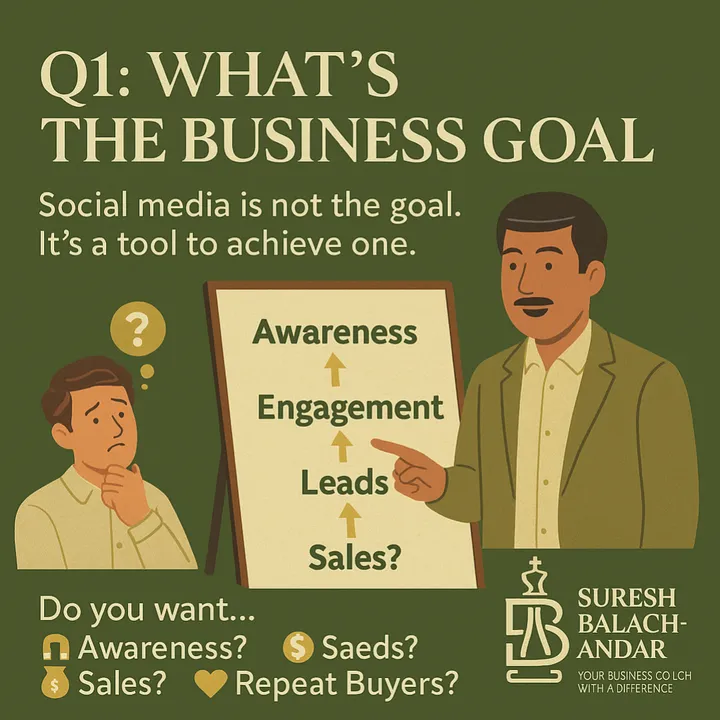
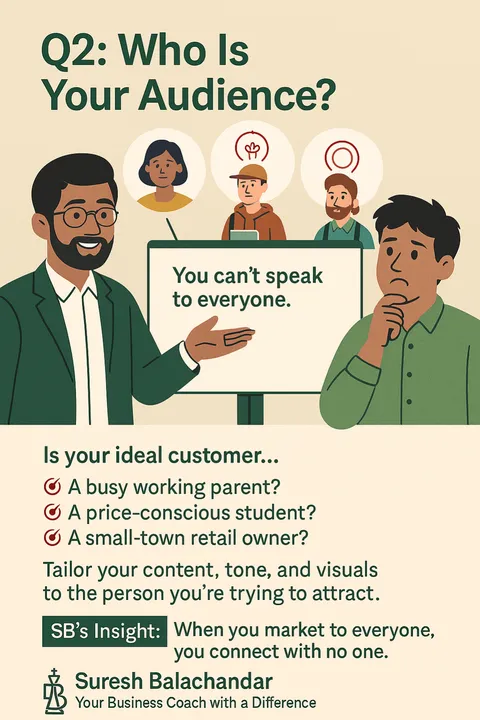
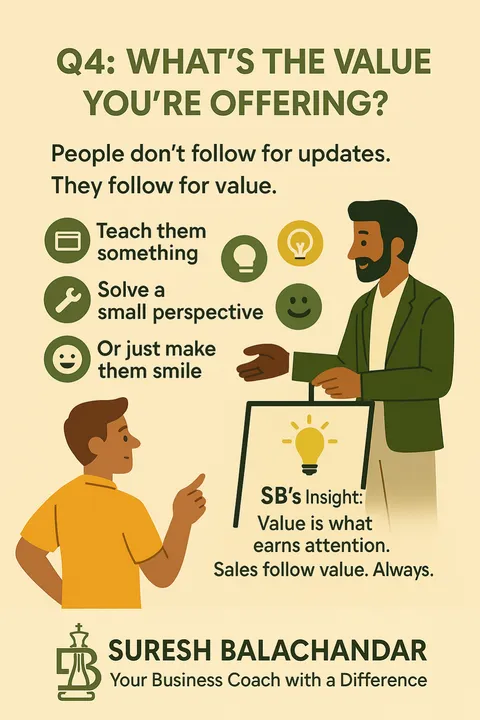
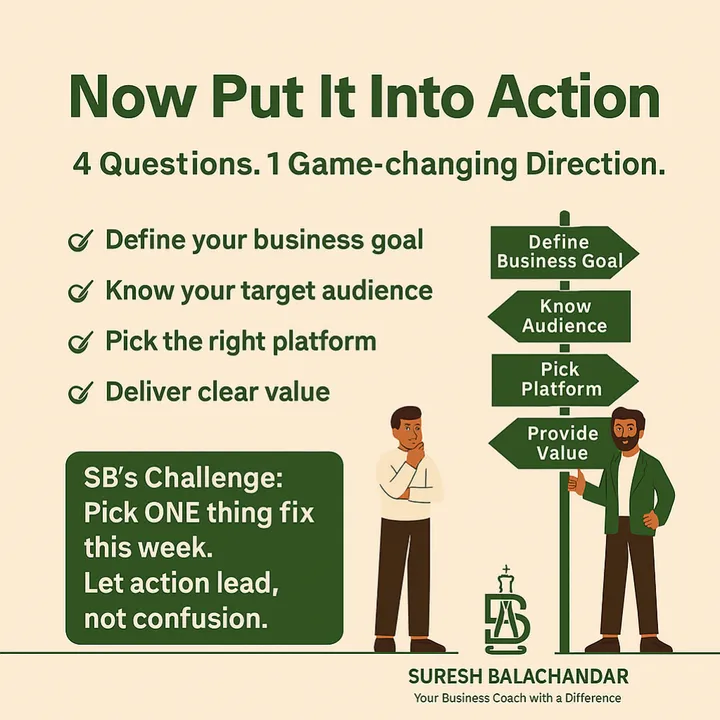
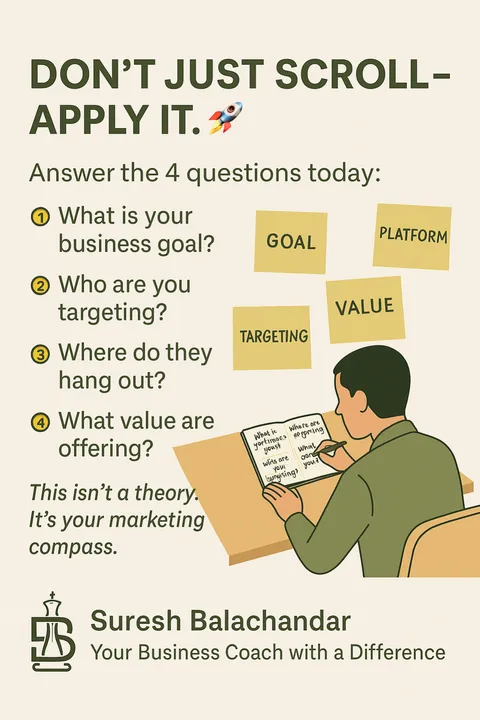
4 questions to boost your social media marketing
Document · August 2025 · 8 pages
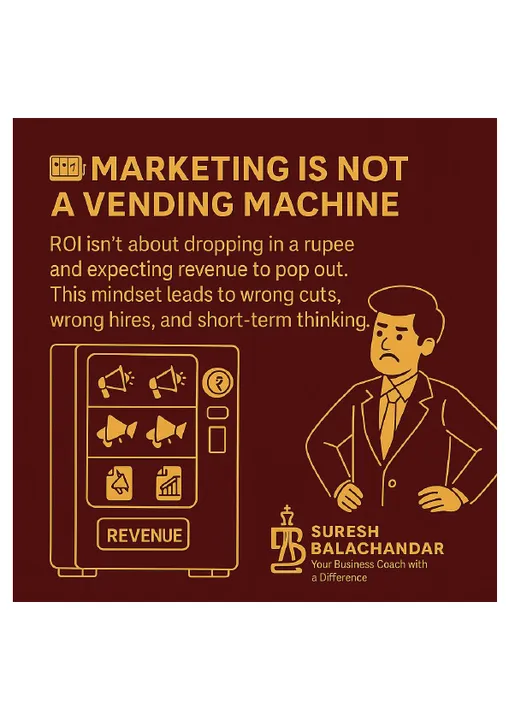
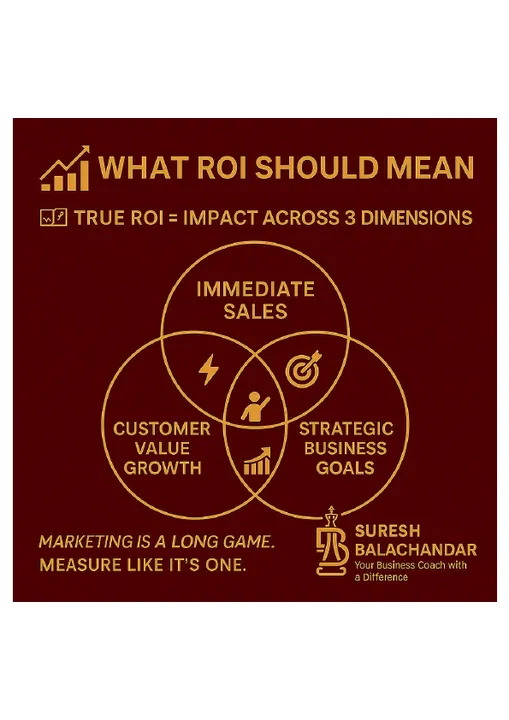
A better way to calculate the ROI of marketing
Document · August 2025 · 8 pages
Why growth stalls
Document · August 2025 · 7 pages
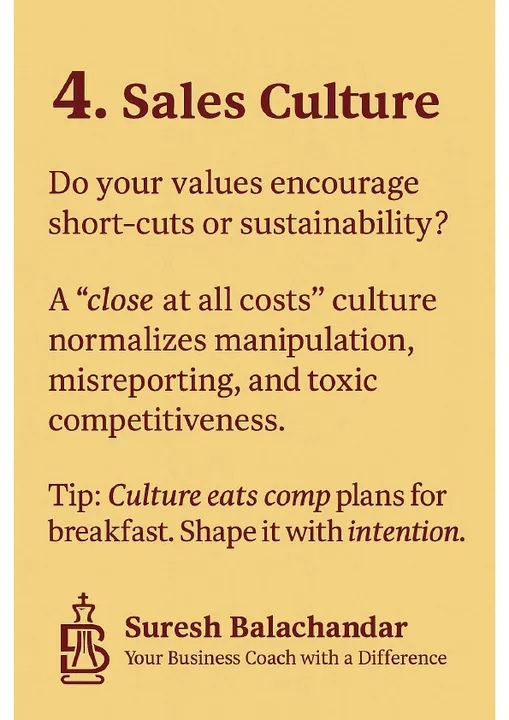
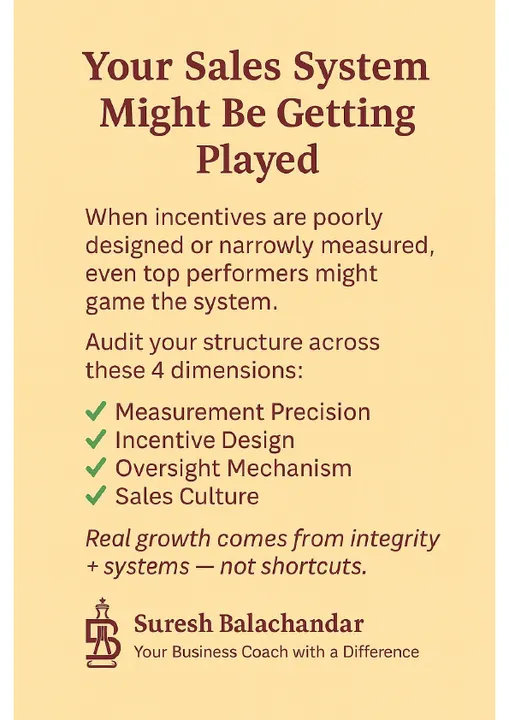
Beating the target, cheating the system
Document · July 2025 · 8 pages
5 reasons your team is not aligned
Document · June 2025 · 9 pages
Thriving in uncertainty